One of the most common questions we hear from homeowners considering a sunroom addition is: “Do I really need a permit for this?” The short answer is yes—and skipping this step can create serious problems down the road.
Understanding the permit process, inspection requirements, and potential tax implications before you start will help you avoid surprises and protect your investment. Here’s what Cookeville-area homeowners need to know.
Do You Need a Permit for a Sunroom Addition?
Yes. In virtually every Tennessee municipality, a sunroom addition requires a building permit. This applies whether you’re building a simple screen room, a three-season sunroom, or a fully climate-controlled four-season room—each type involves structural work that falls under local building codes.
As Scott, a certified sunroom installer with over 40 years in the remodeling industry, explains: “A solid foundation is essential. This could be a concrete pad, a pressure-treated wood deck, or a composite deck.” That foundation work—along with the structural, electrical, and roofing components—all require permits and inspections.
Why Permits Matter
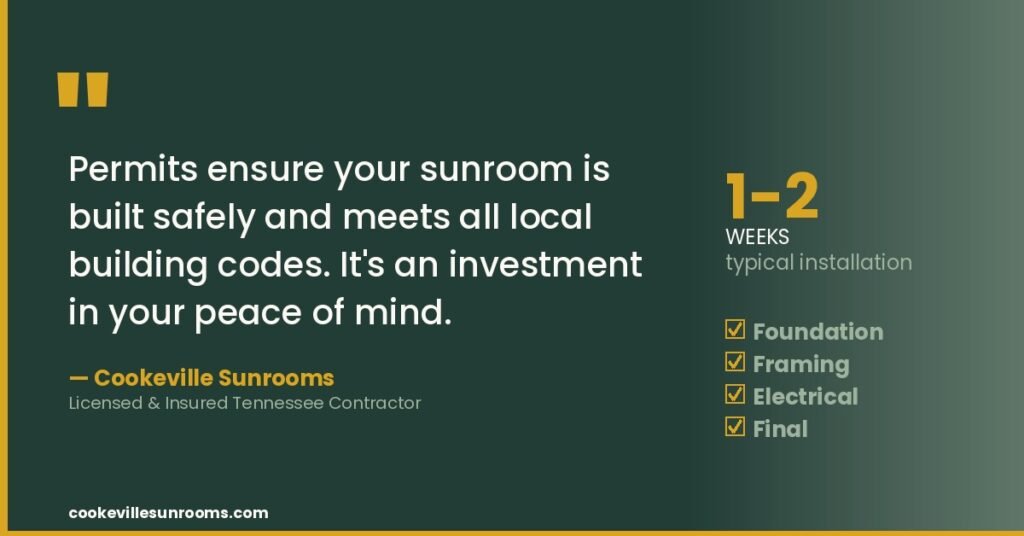
Permits aren’t just bureaucratic red tape. They serve several important functions:
Safety verification. Building codes exist to ensure structures are safe for occupancy. Permits trigger inspections that catch potential problems before they become dangerous or expensive.
Legal protection. Unpermitted work can create major headaches when you sell your home. Buyers and their lenders will discover unpermitted additions during the title search or appraisal process, potentially derailing your sale.
Insurance coverage. If something goes wrong with an unpermitted structure—a roof leak, structural failure, or fire—your homeowner’s insurance may deny the claim.
Resale value. Permitted work with proper inspection sign-offs adds legitimate value to your home. Unpermitted additions often must be disclosed and may actually reduce your home’s marketability. As we discuss in our guide on whether sunrooms add value to your home, homeowners typically recoup 48-60% of sunroom costs at resale—but only when the work is properly permitted.
What Does the Permit Process Look Like?
While specific requirements vary by county, here’s the typical process for a sunroom permit in Tennessee:
Step 1: Submit Your Application
Your contractor submits detailed plans to the local building department. These typically include site plans showing the sunroom’s location, structural drawings, electrical plans, and material specifications.
Some municipalities require professionally stamped architectural drawings, especially for larger additions. Your contractor should know exactly what your jurisdiction requires.
Step 2: Plan Review
The building department reviews your submission to ensure it complies with local zoning regulations and building codes. This includes checking setback requirements (how far the structure must be from property lines), height restrictions, and lot coverage limits.
Don’t be surprised if revisions are requested on the first pass—this is common and not a cause for concern.
Step 3: Permit Issuance
Once approved, you’ll receive the building permit. This document authorizes construction to begin and must typically be posted visibly at the job site.
Permit costs vary by location and project scope. In Tennessee, expect to pay anywhere from a few hundred dollars to over $1,000 depending on your county and the complexity of your sunroom.
Step 4: Inspections During Construction
Your permit will specify required inspections at various construction stages. Common inspection points include:
Foundation inspection – Before pouring concrete or building on an existing structure
Framing inspection – After the structural framework is complete
Electrical inspection – If your sunroom includes wiring for outlets, lights, or HVAC
Final inspection – When all work is complete
Scott notes that timeline-wise, “an aluminum or vinyl sunroom addition takes about 1-2 weeks” for construction. Factor in a few extra days for scheduling inspections.
Step 5: Certificate of Occupancy
After passing the final inspection, you’ll receive documentation confirming your sunroom meets all code requirements. Keep this paperwork—you’ll need it if you ever sell your home or refinance.
What About HOA Approval?
If you live in a neighborhood with a homeowners association, you’ll likely need HOA approval in addition to municipal permits. HOA requirements often address exterior materials and colors, sunroom placement and visibility from the street, size limitations, and architectural consistency with the neighborhood.
Submit your HOA application early in the planning process. Approval timelines vary, and you don’t want HOA delays holding up your project after permits are already in hand.
Will a Sunroom Raise My Property Taxes?
This is a concern for many homeowners, and the honest answer is: probably yes, but it’s not as dramatic as you might fear.
How Property Tax Assessment Works
When you add a sunroom, you’re adding square footage and value to your home. After construction, your county’s tax assessor may reassess your property to reflect this improvement. The increase in assessed value translates to higher property taxes.
How Much Will Taxes Increase?
The tax impact depends on several factors:
Type of sunroom. Four-season rooms connected to your home’s HVAC system are considered full additions and typically have the largest tax impact. Three-season rooms, which aren’t climate-controlled, may be assessed at a lower rate. Screen rooms generally have minimal tax impact since they don’t add conditioned living space.
Local tax rates. Property tax rates vary significantly across Tennessee counties. A sunroom that adds $30,000 in assessed value will affect your taxes differently in Putnam County versus Davidson County.
Assessment timing. Some counties reassess properties on a regular schedule rather than immediately after improvements. You may not see a tax increase right away.
The Flip Side: Increased Home Value
Here’s the perspective that matters: yes, your taxes may go up—but so does your home’s value. That sunroom that raised your assessed value by $30,000 also raised your actual market value, often by even more.
Industry data suggests homeowners recoup 48-60% of sunroom costs at resale, while enjoying health benefits like increased natural light exposure and improved mood every day they live in the home. The modest tax increase is simply part of owning a more valuable property.
Minimizing Tax Impact
If property taxes are a significant concern, consider these strategies:
Choose a three-season room instead of a four-season room if year-round climate control isn’t essential
Build under an existing roof overhang when possible, which may reduce the taxable square footage added
Consult your local tax assessor before construction to understand how your specific project will be classified
Ready to Start Your Sunroom Project?
Understanding permits, inspections, and taxes upfront takes the mystery out of the process. Yes, there’s paperwork involved—but a licensed contractor handles most of it, and the result is a legally compliant addition that protects your investment for years to come.
At Cookeville Sunrooms, we guide homeowners through every step of the sunroom process, from initial design through final inspection. Our free consultations include honest answers about permits, timelines, costs, and what to expect.
Ready to get started? Contact us for a free in-home consultation and learn how a sunroom can transform your Tennessee home.